About Life in B Major

I write stories of YOUR lives as I am a young entrepreneur that trying to deal with the hypocrisy of business, the perils of women, and deciphering the facade of people as they try to manipulate, screw, and extort you ... its a cold world out there, so I can only try to 'play' out my Life in B Major (witty huh?)
Showing posts with label society. Show all posts

Thursday, September 11, 2008

Where the beef should lie


Where the Beef Should Lie
Rappers, misdirection, media

Rappers constantly beef with each other, of all the other musical genres, hip-hop music has to have the most animosity amongst its artists. Rappers have gained a career (a la 50 cent) by dissing and feuding with other rappers and their respective camps, and of course, some rappers have also perished of beef (R.I.P. Tupac & Biggie). The causes and reasons for beefing are self-serving at best; it can be looked at an attempt for one rapper to gain notoriety for dissing another or it can stem from a real personal beef that began before the music. Lately, it has been the former, as many rappers will diss others so that they can get heavy rotation in the rumor mill and spill cycle - this usually happens just around the time when they are releasing an album. At times though, the reason for beefing can seem silly at best, some of these beefs include:

- DFB beefing with D4L over who created the 'Lean with it rock with it' dance
* note: both groups are irrelevant

- Ice-T dissing Soulja Boy because he thinks he is corny

- 50 Cent dissing Ja Rule for singing on the tracks, but then 50 Cent makes a career of singing on tracks ('21 Questions', 'candy shop', 'ayo technology')

- The rise of local/up and coming rappers jacking somewhat-established rappers (like Yung Berg), taking their jewellery, and showing such jewellery on YouTube
* note: YouTube jackings of rappers is a growing and alarming trend, rappers need to get their insurance game up!

Not one to condone beefing or dissing, but I think that rappers need to step up their game and take their dissing/beef to the next plateau; I mean verbally attacking a fellow rapper, saying that you are going to kill him, rob him, et cetera, is not that realistic - rappers should really be beefing with people that are detrimenting their community and society. Hip-Hop, in its childhood was heralded as a genre to address social issues and injustices, the classic song 'The Message', had a real message of how politics, media, and the government had left many inner city New York communities in perils.

Somewhere, along hip-hop's progression, the pursuit of using music for 'social messages' subsided for the pursuit of material wealth. Well, if a rapper is going to 'clap' at anyone, it should not be his fellow brethren, it should maybe be somebody like:


Bill O'Reilly
The popular Fox News pundit has a successful show called the O'Reilly Factor, where the tagline is 'No Spin Zone', this guy has been described as a neo, fascist, racist, biased reporter - everything from calling Michelle Obama Barrack's "Baby Mama", to actually challenging rappers; O'Reilly made Ludacris lose a sponsorship deal with PepsiCo over O'Reilly's rant of Ludacris and his questionable misogynistic lyrics.


Lou Dobbs
If I see another report on illegal immigrants from this guy, I will go crazy. Dobbs complains how jobs are being taken from Americans by migrant workers, but what he fails to realize most times that the jobs that are being 'taken' are the ones that average Americans will not do.
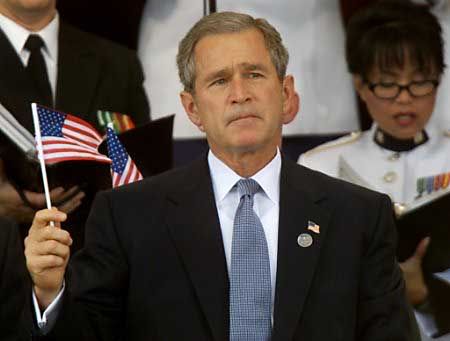


GWB
I think Kanye said it best in the aftermath of Hurricane Katrina, but I have to give rappers credit - they have took jabs and shots at GWB, while more underground rappers have dedicated whole songs to his legacy.

Besides this list, I am sure that rappers can find other sources for beef than another rapper that may or may not have stole their dance, swag, or jewellery.

.:: d.b ::.

Monday, June 09, 2008

El 'Nerbano'


El Nerbano
The Nerban (nerd + urban) ... best of both worlds

The Nerban is the hybrid guy that has carefully meshed the two worlds of hip-hop/urban culture and nerd/geek isms. The Nerban can run in the streets, hang on the block, be affiliated with 'gangstas', and at the same time be abreast with technology, have a diverse investment portfolio, and have B.A.'s and Masters.

The Nerban is respected by hip-hop culture because of his nerdy-knowledge of technology and such; in the same breath, the nerds respect the Nerban because of his knowledge of hip-hop culture. Each group lives vicariously through the Nerban to get a glimpse into 'the other side'; the gangsta's get to learn about what's poppin' with the nerds, and the nerds get to see some urban swag and style.

With the ladies, the Nerban is the prime choice for the lady that is not looking for a gangsta, not looking for 'poindexter', but is looking for someone with a little bit of edge & style mixed with knowledge & ambition. Most ladies will experience a Nerban at some point in their life, but will have a tendency to disregard the Nerban because he isn't too 'street' enough, and usually these ladies end up where the Nerban was lacking (i.e. the Street - out on their own, lost).

The Nerban has always lived throughout history, from:


The Goofy Nerban


Will Smith a.k.a. 'The Fresh Prince'
~ His goofy style of rap lauded him to a Grammy and a hit TV show, he then used that to develop a successful movie career - All this from "parents just don't understand".

The Conscious Nerban


Common
~ The type of brother to school you with spiritual thoughts, but isn't scared to go into battle, remember the battle with Ice Cube anyone??


The Arrogant Nerban


Kanye West
~ Do I really need to explain this???????


The Righteous Nerban


A Tribe Called Quest
~ These nerbans are about having a good time, dancing, chilling, but can get grimey when need be.


The "Odd, but can't hate on him" Nerban


Pharell
~ Clothing and style has funky colors and patterns, social activities divert from the norm, but this Nerban can deliver in the streets or the boardroom.


.:: d.b ::.

Wednesday, June 04, 2008

Tip What? pt. 3


Tip What? pt. 3
The 'Included' Tip Get Familiar with Tip What pt. 1 & Tip What pt.2

I was recently out with a large group of people at a cafe/restaurant; roughly there were 10 of us. The joint was well designed, ambience was positive, and we were all enjoying the sweet delicacies of ice cream, crepes, and other fattening artery clogger-foods. When it was time to boogie, the waitress never asked if we wanted one receipt or separate receipts - she proceeded to give us one receipt with everyone's orders. I was fine with that; my portion totaled to like $4.74, so I believe I gave like $6 or $7 - figuring that it would cover taxes and would even add to a tip for the waitress. However, I was quickly prompted that I had to throw in $10 due to a gratuity that was already calculated into the bill. I obliged, but I was taken aback - it should be up to the customer if they choose to give a tip or not. Furthermore, automatically calculating the tip into bill is like a 'slap in the face'; the restaurant is pretty much saying 'you are going to pay a tip, regardless if you like it or not'. I guess restaurants engage in this practice because they figure with groups, they may not subscribe to socially practice of tipping (which is x% .... I don't even know, because I don't practice that foolery), meaning that the group may still tip, but below the 'acceptable norm'. And in retrospect, maybe the restaurants do this because dealing with groups can be problematic for their wait staff - for our group, some of the orders will wrong on the bill, some of the 'fresh fruit' was far from it, and a lot of the group members were not really pleased with their meal. I mean, look @ me; I really wasn't going to tip anyway - and I'm sure many of the other group members were going to follow in a similar fashion.

Its a very good thing though that I wasn't paying the bill for the whole group, because I would have ignored that 'auto' tip, and maybe even do a D&D (best way to work out calories ... instantly!).


P.S. d.b or its affiliates does not endorse Dine & Dashing at any restaurants, cafes, or the like.

Xtra Thought ~~
Look out for great pieces about D&D in the future though! D&D's are best done in foreign cities and when on vacations though.

Sunday, May 11, 2008

Blue Devils


Blue Devils
Jon Hope feat. Terminology

Hip-Hop isn't dead, the real hip-hop is just a lot harder to find, is not in the mainstream, and lives on the Internet as opposed to your pop radio station. Hip-Hop has always been the first medium/media to report on social injustices; from "The Message", "Self Destruction", and other songs, Hip-Hop gives insight to what problems are affecting the community.

This song by Jon Hope & Terminology was inspired by the recent events of the Sean Bell incident, and comments on police brutality and injustice.

.:: d.b

Friday, May 09, 2008

Super D's & Bill Clinton


Super Delegates & Bill Clinton
The Power, and the Questions the Super D's must ask

This Democratic race between Senator Barack Obama and Senator Hilary Clinton is a nasty contest; as both candidates are fighting to secure the democratic nomination. In an election year, where the general public wanted to see a change from the Bush regime, that is to say to avoid another 4 years of Bush style politics in a John McCain, the Democratic party is so divided that they may have hurt their chances to win the general election. At the beginning of 2008, heck even 2007, the democratic party expected to win the '08 election because of the many ills the current administration has administered on the American people and the world.

Mathematically, Obama has the nomination locked - but not all math is equal; meaning all values are not treated the same. We all have been introduced to the term 'Super Delegates', and it is the super delegates that ultimately have the power to decide and can override what the delegates decide. And it appears that Clinton will have more Super Delegates than Obama.

Thus, the Super Delegates have some tough questions to ask of themselves:
1. What will be the social cost of selecting Clinton over Obama, even though Obama had more votes than Clinton.
Answer: This will send a message (direct/indirect) that even if a Black Man can win, ultimately he will lose. Furthermore, this can cause social upheaval as the cost of this decision is not just Obama vs. Clinton, but will also regress the progress that black people have accomplished.


2. How much loyalty do I have to Bill?
Answer: To the Democrats, Bill Clinton is the best thing since slice bread - on a whole, the Clinton presidency was one of the best eras in U.S. history in terms of economic and social progress; the economy was soaring, jobs were booming, and the healthcare industry was improving. Thus, a lot of the Super Delegates owe their status to Bill Clinton - meaning that Bill still has a lot of pull within the upper echelons of the Democratic Party, and if it comes to the Democratic nomination being decided by a bunch of Super D's in a back room, then Bill Clinton will be a power to be acknowledged.

In all, whoever the democratic nominee will be, they will have the daunting challenge to reunite a dilapidated party that is divided by gender, racial, and ideological differences, and will have to mount a tight campaign in a short period of time.

...... Looks like the Bush Regime will die another day, McCain can't be any worse, right?

.:: d.b

Thursday, May 08, 2008

Rodney King '08 in Philly


Cops beat up Suspect
Rodney King '08 in the city of brotherly love

This is nasty, the quiet video speaks volumes of how law enforcement treats black people. In this instance, in Philadelphia, cops drag out a fleeing suspect from his vehicle and a gang of cops take turns throwing in kicks & punches. Apparently it takes upwards to 10+ officers to take down two suspects. Philly already has to deal with one of the highest crime rates, poverty, and an unequal social system - so this event, doesn't help the city of 'brotherly love'.

A social response is necessary, violence/riots may not be the answer - protests and rallies may be useful, but how much can people take of this injustice? First Sean Bell, Jenna 6, and now this???

.:: d.b

Monday, March 17, 2008

The Wire, a synopsis of an American story

From Hbo.com:

The Wire show creator David Simon imparts his final words about the series

David Simon
It wasn't for everyone. We proved that rather quickly.

But episode to episode, you began to understand that we were committed to creating something careful and ornate, something that might resonate. You took Lester Freamon at his word: That we were building something here and all the pieces matter.

When we took a chainsaw to the first season, choosing to begin the second-story arc with an entirely different theme and different characters, you followed us to the port and our elegy for America's working class. When we shifted again, taking up the political culture of our mythical city in season three, you remained loyal. And when we ended the Barksdale arc and began an exploration of public education, you were, by that time, we hope, elated to understand that whatever else might happen, The Wire would not waste your time telling the same story twice.


This year, our drama asked its last thematic question: Why, if there is any truth to anything presented in The Wire over the last four seasons, does that truth go unaddressed by our political culture, by most of our mass media, and by our society in general?

We've given our answer:

We are a culture without the will to seriously examine our own problems. We eschew that which is complex, contradictory or confusing. As a culture, we seek simple solutions. We enjoy being provoked and titillated, but resist the rigorous, painstaking examination of issues that might, in the end, bring us to the point of recognizing our problems, which is the essential first step to solving any of them.

The Wire is fiction. Many of the events depicted over the last five seasons did not, to our knowledge, happen. Fewer happened in the exact manner described. Fiction is fiction, and it should in no way be confused with journalism.

But it is also fair to note that the problems themselves — politicians cooking crime stats for higher office, school administrators teaching test questions to vindicate No Child Left Behind, sensitive prosecutions and investigations being undercut for political motives, brutal drug wars fought amid a police department's ignorance of and indifference to the forces involved -- were indeed problems in the recent history of the actual Baltimore, Maryland.


Few of these matters received the serious attention — or, in some cases — any attention from the media. These problems exist in plain sight, ready to be addressed by anyone seriously committed to doing so. For those of us writing The Wire, a television drama, story research involved dragging the right police lieutenants or school teachers, prosecutors and political functionaries to neighborhood diners and bars and taking story notes down on cocktail napkins and paper placemats. To be more precise with their tales? To record it and relay it in a manner that can stand as non-fiction truthtelling? Yes, that's harder to do. But there was a time when journalism regarded that kind of coverage as its highest mission. The true stories that The Wire traded in are out there, waiting for anyone willing to take the time. And it is, of course, vaguely disturbing to us that our unlikely little television drama is making arguments that were once the prerogative of more serious mediums.

We tried to be entertaining, but in no way did we want to be mistaken for entertainment. We tried to provoke, to critique and debate and rant a bit. We wanted an argument. We think a few good arguments are needed still, that there is much more to be said and it is entirely likely that there are better ideas than the ones we offered. But nothing happens unless the shit is stirred. That, for us, was job one.

If you followed us for sixty hours, and you find yourself caring about these issues more than you thought you would, then perhaps the next step is to engage and to demand, where possible, a more sophisticated and meaningful response from authority when it comes to such things as the drug war, educational reform or responsible political leadership. The Wire is about the America we pay for and tolerate. Perhaps it is possible to pay for, and demand, something more.

Again, accept our sincere thanks for making the commitment to watch a show as improbable and problematic as ours and for considering the arguments and issues seriously. We are surprised as you are to be here at the end, on our own terms, still standing. As a cast and crew, we're proud. But the credit is not all ours. It's yours as well for believing, year after year, in this story.

David Simon
Baltimore, Md.
March 10, 2008

.:: d.b

Life in B Major
Subscribe for the latest urban literary works from D dot B

Monday, January 07, 2008

Starblocks


StarBlocks
"The culture of the coffee-stop empire."


This is just an observatory piece of being at a Starbucks on a Friday night in the T Dot. My unorthodox biz partners & I, decked in modern hip-hop attire; hoodies, loose fitting jeans, and portable mp3 players walk into a Starbucks in one of the moderate-to-affluent parts of our city (* Note, I don't know about your city, but there are no Starbucks in our hoods). Naturally, when 3 big black guys walk into such an establishment, there are the usual quick glances away from us, and awkward pauses in their conversations with each other. Which I understand, sadly, because you know, we are out of our element - however I'm not writing about that ... been there, done that, ya dig?

So after getting hot beverages that were obtained/stolen/exploited from Africa (topic for another day), we sat down & got to business. After getting work done & cracking jokes, it hit me that this Starbucks was jumping: big line-ups & the cash register, friends coming in rocking the Hollister, Abercrombie & Fitch, and American Eagle, and dudes rocking the California Beach Boy look that Starbucks is into a bit more than selling coffee. Some patrons were studying amidst elevator & jazz rhythmics, while other patrons were discussing the previous week's events with their friends. What was interesting, besides the fact that they were predominantly white, is that they dressed similar, represented the "Millennial" generation - cohort 1 & 2, and all embraced & understood (consciously or not) the point of this piece. Starbucks is not about selling coffee, Starbucks sells social experiences. People literally were dressing up, pulling up in upscale vehicles, and not just to order marked-up coffee, but to meet friends, gossip, engage each other, pretty much to 'connect'.

This is just my logic of the $7.8 billion dollar a year coffee shop, and why they nicely decorate their interior with earth tone colors, play non-popular music, and use distinct language (grandé, tall).

So now I guess I know why they looked @ us the way they did; its not the usual racial prejudice mixed with a dash of stereotyping.

We did not fit in with their social experience & the cultural norms that come with it.

But F*** 'em anyway, I'm about re-defining the box, not assimilating to it, bitches!

Saturday, December 01, 2007

Flipping, keeping the balance


image by ddotb.grandejunction.com

Flipping, keep the balance

Virtues: hustle, equilibrium, power, control

Flip - "To sell a product or service at a higher price than what was purchased for - for the purpose of making a profit"

The concept is simple: take something at a marginalized price, mark it up, profit. That is what your neighborhood drug dealer is doing while he pushes that 'weight'. Its what Sean John does when you buy that nice sweater for $80, is made for like under $5, and the country that the sweater is made in flips off the blood, sweat, and tears of their people in the name of globalization. But, the government still flips, they get their money, but unfortunately with each flip, there is one, or one group of people that will always suffer, always get 'flipped under'.

When I hear pleas wrapped in optimism about equality & fairness, I laugh. Because, flipping is all about balance, but more about controlling balance. Economics are structured in a fashion where the rich exploit & profit off of the poor, unfortunate, but fortunate at the same time ... ya digg? Unfortunate for the humane aspect, fortunate for the technological advances that society has made by exploiting cheap labor and parts. Corporations & the government are the big flippers in this world as they have made Africa poor, for the benefit of the West. As with anything almost in this universe is made up of matter, and matter is made up of molecules that constantly try to procure homeostasis: a relatively stable state of equilibrium or a tendency toward such a state between the different but interdependent elements or groups of elements of an organism, population, or group.

And that is what flipping does - it keeps stability, it allows those to stay in power to stay in power, and keep those that are marginalized, marginalized. So what would, uh, disrupt this equilibrium? Well, tell me if you have an answer, because any disruption is surely going to be met with opposition, of course from the flippers. I ask myself, would a disruption actually be a good thing? I mean, can a world exist where economies of scale (world economies) are equal? Can, or will Africa ever be on par with Europe/America?

Share your thoughts, peace.

Sunday, November 25, 2007

Tip What, Pt 2


Tip What, Pt 2
(view Part 1)
Virtues: Social Customs, service, ethics

As the Christmas holiday season approaches I'm hearing a lot of talk on tipping. For instance, people give tips to their mailman or mechanic - which I find interesting. I mean, I would love to work in a service industry where I am tipped just for performing my job duties, shit, maybe being a waiter is my calling as I purposely hang around your table after the bill has been served to ensure that I receive my tip. Or better yet, I should work in a hotel as a bellhop and conduct the same behavior. It would be sweet - I mean, I would get a regular salary (not much), but then I would base my service to customers on how well they have tipped me. Its interesting that this social customary called 'tipping' is almost mandatory in the service industry, however essentially it is almost a bribe - I mean, if one were to give a service contract or even a government employee a 'lil extra', society as a whole and I'm sure most courts of laws would consider that bribery. You know, 'Scratch my back, I'll scratch yours' type of logic.

I may sound a bit, ah, um ... real, but we have reached a pivotal time in our society where we want to be rewarded more for simply doing our jobs. I don't know what generation this has spawned out of, but this creates a climate where we don't necessarily tip for 'exceptional service', but we tip to ensure service. Meaning, you are not going to tip your mechanic because he does such great work, but more or less, you're tipping him for the hope he doesn't screw you over in the coming year. Same with the mailman, I don't know exactly how the mailman can provide 'exceptional' mail service (please share if you do), but if you tip him, you are doing so with the intentions that he performs his job by giving you regular mail service.

Now, maybe - correction, I know that people do actually tip these people during these seasons just based out of the goodness from their heart, and that is truly a beautiful thing. BUT, if you are planning on tipping just to procure services or to pretty much BRIBE, then you your f*cked.

Happy Holidays

(P.S. I rarely tip, only for exceptional above & beyond service. I don't do any percentage calculations of the bill, I dont give a ______ < insert word here)

Thursday, November 22, 2007

The conditioning of Frederick Douglas


Frederick Douglas
"I would unite with anybody to do right and with nobody to do wrong"

Some background information on Frederick Douglass, excerpt from wikipedia.com:


Frederick Augustus Washington Bailey, who later became known as Frederick Douglass, was born a slave in Talbot County, Maryland, near Hillsboro. He was separated from his mother, Harriet Bailey, when he was still an infant. She died when Douglass was about seven. The identity of Douglass' father is obscure: Douglass originally stated that his father was a white man, perhaps his owner, Aaron Anthony; but he later said he knew nothing of his father's identity. At the age of six, Douglass was separated from his grandmother and moved to the Wye House plantation, where Anthony worked as overseer.[1] When Anthony died, Douglass was given to Lucretia Auld, wife of Thomas Auld. Mrs. Auld sent Douglass to Baltimore to serve Thomas' brother, Hugh Auld.
When Douglass was about twelve, Hugh Auld's wife, Sophia, broke the law by teaching him some letters of the alphabet. Thereafter, as detailed in his
Narrative of the Life of Frederick Douglass, an American Slave (published in 1845), Douglass succeeded in learning to read from white children in the neighborhood in which he lived, and by observing the writings of the men with whom he worked. When Hugh Auld discovered this, he strongly disapproved, saying that if a slave learned to read, he would become dissatisfied with his condition and desire freedom; Douglass later referred to this as the first anti-abolitionist speech he had ever heard.
As he learned and began to read newspapers, political materials, and books of every description, the young Douglass was exposed to a new realm of thought and experience that led him first to question and then to condemn the institution of slavery itself. In later years, Douglass would credit The Columbian Orator, which he discovered when he was around twelve years old, with clarifying and defining his views of freedom and human rights.
When he was hired out to a Mr. Freeman, Douglass taught slaves how to read the New Testament at a Sabbath school on the plantation. As word spread, the interest among slaves in the local community was extensive enough that on any given week over forty slaves would attend lessons. For about six months, their work went relatively unnoticed. While Freeman himself remained complacent about their activities, other plantation owners became incensed that their slaves had been offered such instruction and burst in one Sunday armed with clubs and stones to disperse the congregation permanently.

___________


I just finished reading the Narrative of the Life of Frederick Douglass, an American Slave, and it was a very good read, very sad at times with Douglass' personal recollections of the horrid nature of slavery, but it was very informative. First off, Douglass is a Black History figure that doesn't really get too much spotlight/coverage in 'Black History Month'; for example, I was first aware of the man from a T-Shirt. After research, and then reading his book, Douglass was an extraordinary man (not just 'Black man') for his time. From teaching himself as a youngster to read and write (which was prohibited for black people) by secretly learning from white kids, and deceiving them to give him any reading/educational materials, to taking his literary knowledge and secretly holding classes for other black people (young & old), Douglass was a modern day renaissance as he knew that knowledge is power. Society in the south, and especially the slaveholders knew this, and would torment and violently whip any black slave who was trying to educate themselves. Mentally, slaveholders and the white racist society of that time, pulled the ultimate mind-f*ck on black people. I always knew this, didn't really know to what extent and the details involved, but let me showcase some:
  • Slaveholders would actually be 'generous' enough to give slaves the holidays off until the New Year; so in a sense, slaves were literally 'free' during this time. However, the slaveholders would purposely intoxicate the slaves with cheap liquor, so much to the point that their little 'freedom' was heavily engulfed in a staggering/hangover state - which was supposed to convey that 'freedom' isn't something that should be desired

  • Barbaric sports such as wrestling and boxing were encouraged by slaveholders

  • Reading was prohibited, as the belief was that an educated 'slave' can not handle education and will not know what is good for him, the master only knows what is good for a slave

  • Slaveholders never starved their slaves; actually they made it known that they always gave their slaves plenty of food, the food was equivalent to slop, but it was in mass abundance

  • When black women gave birth, the slaveholders separated the child from its mother from a young age so that the child can not develop attachment and affection to its mother, but rather develop attachment to the slave owner
Some of the things that were done to black people were not just dehumanizing, but it was conditioning; in the sense of it altered the way people behaved, think, and responded. This happened all from the 1700's to mid-late 1800's, this conditioning was passed down with each black generation. Even after slavery was abolished, this conditioning, and more importantly, the society, was still segregated and there was a hatred/inferiority complex that existed by certain populations.

Fast forward to the current state of black people in America, and the question must be asked, when/if will the conditioning that black people have succumbed to, will subside? How much generations will it take? I mean, we have definitely made progressed, we are doctors, lawyers, entrepreneurs, politicians, but there are huge numbers that still have that 'slave' mentality that end up in jail, commit crimes, are against the 'system', don't educate themselves, and so on.

How long will this 'spell' last????

Share your thoughts .....

Peace,
d.b
Check out Vacant Lot: Science of Hip-Hop - quotes and knowledge


Thursday, April 12, 2007

The Good Piece?


The GOOD Piece?
Virtues: positive, goodness, humanism, respect


I was reviewing a couple of my blogs that I have written, and I came to the conclusion that I have been mostly negative - I'm always complaining, bitching, or protesting about something. Am I going to stop? No. But I am going to try to write something a bit more 'good' - in the sense of 'good' being good things and events that are all around us. Even when I'm reading other blogs from members of myspace or beyond, the mood is very pessimistic/cynic-like.

So what 'good' is out there in the world? We can all say that God is good, family, and friends - that should be understood by all, regardless of religion, race, or creed.

The Democratization of the Internet has been good; now any mofo can expose themselves to a bigger audience, and for the most part except for Internet service fees, the Internet is primarily free, and 'we' the people are taking control of its direction (kind of).

Hip-Hop, be that it is at a pretty shitty state at the moment, hip-hop culture is still a creative artform and expression for many.

Open Source, a wild and radical idea that allows programmers to share their code with the world. Many corporations frown upon this (as it is their trade secrets), but open source, or at least the initiative, has created many useful applications: Firefox, Picasa, wikipedia, etc., with a collaborative effort of many people around the world.

Google, not just for their simplistic search engine, but for their user applications; specifically, Google docs (trust me, you'll never want to use Word or Excel again).

Environmental push, thanks to man's self-inflicted problem of global warming, and high oil prices, we have taken steps to seriously create panels to discuss the future of our environments - perhaps those panels will actually do something ... we can only hope.

Goodwill, the Tsunami, Katrina have showed that even with all of the evils in the world, humans can still give and help out their fellow man in a time of crisis; whether it is food, money, or volunteering in disaster areas.

T.V., the quality of television has surpassed the whole movie medium (in my opinion). Shows confront risqué topics and push the boundaries and limits of the norm. Shows like the Wire, Sopranos, 24, Heroes, Weeds, and others make
it more worthwhile to watch a T.V box set, rather than go out to the cinemas to pay for too much popcorn and uncomfortable seats.

Stem cell research, even though Bush is against this, this research technology can eventually solve most of the world's illnesses. The ethical issue is whether it is just to take dead cells away from an organism to help save the life of another organism (I think that is what stem cell research is, in simplistic terms).

Wow, maybe my mind is blank or that may be all of the good things that I can
think of. Can y'all help a brother out and let me know what else is really good? (No pun intended).